Tag: Herbal Medicine

Nettles – The Taste of Spring

An invasive weed with a cruel sting that should be banished from our gardens, or an extraordinary wild plant that is a valuable medicine as well as a nourishing food …. what’s your view? I am a huge fan of nettles and look forward each spring to making a vibrant soup using the first of the year’s growth.

Nettle (Urtica dioica) is a veritable superfood, rich in micro-nutrients, phytochemicals, minerals and vitamins including vitamins A and C, and minerals particularly iron, silica and potassium. With their astringent, expectorant, diuretic, antihistamine, anti-inflammatory and antioxidant effects, all parts of the nettle can be used as medicine and have been for countless generations.  Apparently, St Patrick blessed the nettle as the plant put to more varied and useful purposes than almost any other herb. Its fibrous leaves and stalks have been used to make paper, fishing nets, sails, sheets, tablecloths, ropes and textiles since the Neolithic times. In World War I, the Germans used nettles to make sail cloths, sacking and army uniforms. Nettles have also been used in beer and cheese making. Today the tough fibres from nettle stems are again being used to make cloth as they are eco-friendly and easy to grow. Apparently, nettle is stronger than cotton and finer than hemp. 

Nettle tops make a nourishing as well as detoxifying spring tonic, very useful after the rather clogging sedentary habits of the winter to prepare you for a healthy spring and summer. They stimulate the action of the liver, the main detoxifying organ of the body, and support the cleansing action of the kidneys through their diuretic action. This also helps to relieve fluid retention and can ease cystitis and urethritis. Nettle has a reputation for softening and expelling kidney stones and gravel, and as a remedy for bedwetting and incontinence. It enhances the excretion of uric acid through the kidneys so it is good for gout and other arthritic conditions. Through its cooling, anti-inflammatory and cleansing action, nettle can be used for inflammatory skin problems including eczema, psoriasis, acne, boils and abscesses. Nettle tea is an old cure for urticaria and eruptive infections such as chicken pox. 

In the digestive tract, the astringent action of nettles provided by the tannins helps protect the gut lining from irritation and infection and can be used to treat diarrhoea, inflammation and ulcers, as well as worms. Long-term use of nettle is also helpful in prevention and treatment of chronic inflammatory bowel problems including colitis and to reduce blood sugar. The seeds are anthelmintic and make a good remedy for worms and parasites.

A great remedy for the immune system, nettle leaves can soothe the histamine-mediated allergic response and ease allergies such as eczema, asthma and hay fever. They can be used to reduce fevers when taken as a hot tea and have antimicrobial activity against a wide range of infections including bacteria Staph. aureus and Staph albus. It may well be the flavonoids in nettle that have immune-stimulatory effects. The lectins (UDA) also have immunomodulatory effects with anti-viral and anti-fungal effects. All parts of nettle can be used for respiratory problems. Their cleansing and astringent properties help to clear catarrhal congestion. A tincture of the seeds is a traditional remedy for fevers and lung disorders; a decoction of the root has been used for sore throats, asthma, inflammatory chest conditions and pleurisy.

Studies have demonstrated that nettle has powerful antioxidant activities which explain its reputation as a rejuvenative. The leaf and root have anti-inflammatory actions by preventing prostaglandin formation. They also have immuno-modulating effects and may inhibit the inflammatory cascade in inflammatory and autoimmune diseases like rheumatoid arthritis. Its analgesic effect contributes to its positive effects here. Studies have found that nettles can decrease free radical concentrations in both the cerebellum and frontal lobe of the brain which could prove beneficial in preventing cognitive decline as we age. Nettle could also be helpful in prevention of other immune and endocrine problems including low thyroid function and cancer.

The root has long been used in treatment of urinary problems, prostatitis and benign enlargement of the prostate. It contains lectins and certain types of complex sugars which, according to much modern research, are probably the major components contributing its benefits which come about through their ability to affect hormones and proteins that carry sex hormones in the body. The anti-proliferative effect of stinging nettle roots extracts has been observed with an inhibitory effect on the growth of the lymph node carcinoma of the prostate.

Nettle seeds make an excellent kidney and adrenal tonic, increasing energy and vitality, improving resilience to stress whether physiological or mento/emotional. They help regulate thyroid function and make an excellent medicine for the reproductive system. They have a reputation for regulating periods and enhancing fertility, and have long been used to stimulate milk production in nursing mothers.  Dried nettles have been added to cattle and poultry feeds to increase milk and egg output. With their astringent effect, nettles make a good remedy for stemming bleeding; they can lessen heavy menstrual bleeding and help raise haemoglobin levels by their rich iron level. They have also been used as a restorative and rejuvenative remedy during the menopause and beyond. 

From an Ayurvedic perspective nettle has light, dry and penetrating qualities with astringent, bitter, sweet and salty tastes. It is considered particularly useful at this time of year for removing excess kapha after winter and reducing pitta in preparation for the increased heat of spring and summer. It is an excellent rejuvenative and nourishing tonic, increasing ojas, clearing ama and excess pitta and kapha from the rasa and rakta dhatus.

Externally the fresh juice or tea can be applied to cuts and wounds, bites and stings (including nettle sting), haemorrhoids, burns and scalds, to stop bleeding and speed healing. Made into an ointment, nettle can help to relieve irritating skin conditions such as eczema. A compress of nettles has been used traditionally for arthritis and muscular pain, as well as sciatica. A poultice used to be applied to the chest in pleurisy. In World War II nettles were gathered for their high chlorophyll content and used as a dressing to reduce the odour and speed healing of badly infected wounds. An infusion of nettles makes an excellent mouthwash and gargle for a sore mouth or sore throat and a stimulating hair tonic. A bunch of fresh nettles is said to keep flies off food. Nettles are often used in shampoos as they are said to reduce dandruff and hair loss. 

Fresh nettles are still used today in the same way as they were used by the Romans, to stimulate the circulation by stinging the skin. ‘Urtication’ as this treatment is called, is a rather painful therapy involving stinging the skin with fresh nettles to produce a counter-irritant effect. This rather drastic form of treatment has been used to good effect in arthritis. By increasing the flow of blood to the surface of the skin and inducing inflammation over an already chronically inflamed joint, urtication will take the fluid and toxins away from the area and help to relieve the pain and swelling. I have seen this in South America where urtication has been used to stimulate the circulation even in serious conditions such as gangrene and threatened amputations. In Russia urtication has been part of their folk tradition for centuries. Stinging the skin for a minute or more a few times daily was recommended for coughs, paralysis, loss of muscle power and muscle wasting, sciatica, arthritis and to stimulate menstruation.

Nettle leaves are also  great for biodiversity in your garden. They are the food source for the red admiral, small tortoiseshell, painted lady and comma butterflies, when they are in the caterpillar stage.

To grow nettles for food – or for wildlife – they need regular cutting to encourage delicate new growth. Once the plant sets seed the leaves are tough and undigestible, but they new leaves will regrow almost indefinitely when cut. The leaves, seeds and roots can be prepared as teas, tinctures and powders.

Here are some delicious recipes for inspiration:

River Cottage Nettle Soup

Riverford Field Kitchen Nettle Pesto & Nettle Cordial

BBC Good Food Nettle Spanakopita

How do you add nettles to your diet – let me know if you have any favourite dishes I’ve missed!

Herbal Fun at Trill Farm

For many years now I have really enjoyed teaching a seasonal course in herbal medicine which takes place over four weekends at the beautiful Trill Farm near Axminster, Devon. This year we didn’t know until the very last minute whether or not the course was going to go ahead and we had to squeeze four weekends over two lots of four days, which all happened in August and September. It really was a crash course in learning how to look after yourself using the amazing herbal resources growing around us!

Each day we started by going out and foraging for herbs, gathering them from the herb gardens as well as the 300 acres of the most beautiful woodland, meadows and orchards that make up Trill Farm. We then explored how the different tastes that occur in herbs can provide us with very good clues as to their biochemical constituents (ingredients) and how they act therapeutically in the body.

Tasting herbs is not always as pleasant an experience as you might expect! We encountered some incredibly bitter herbs, particularly burdock (shown in the photo on the left) and chicory leaves. The course is largely experiential; learning about herbs from books is one thing, but spending time with herbs, looking at them, touching them, smelling them and tasting them leads to a deeper knowledge and understanding that can only be gained through first hand experience.

Through the course we have explored many different ways that we can prepare herbs so that they interact with us physiologically and exert their healing benefits. The most obvious, of course, is eating them and then making them into teas – which we did over first two days. After that, in the second workshop, we collected lots of herbs to make into tinctures and glycerites.

In the third workshop we had fun pressing and tasting the tinctures and glycerites that we’d made the month before, and then we collected herbs to make into healing salves for the skin.

In the last workshop each student made their own ‘elixir of life’ with strengthening, nourishing and rejuvenating herbs to keep them going through the winter. We particularly enjoyed making herbal energy balls from incredible adaptogenic herbs – such as licorice, ashwagandha and Siberian ginseng – which are great to boost our energy and increase our immunity and longevity.

I love teaching these workshops each year and I am very grateful to Romy Fraser for hosting the seasonal herb courses for so many years at Trill Farm. Keep an eye on my website for further seasonal workshops in 2021!

all the best

Anne x

RESCHEDULED: Herbal Medicine Course at Trill Farm

I am delighted to say that the Seasonal Herbal Medicine course at Trill Farm has been rescheduled to run in person at Trill Farm in August and September this year! It will be fantastic to move out from behind a laptop and to teach in person – even if at a distance! A lot of thought and planning has gone into the rescheduling of these workshops to ensure that everyone will be safe. We will be following the latest PPE and social distancing guidelines, whilst also making sure that students are still receiving excellent teaching.

This course usually sells out very quickly so if you would like to take advantage of this unusual situation then please book with Trill Farm as soon as possible.

This course consists of four workshops (Spring, Summer, Autumn and Winter) to provide you with knowledge and skills to use the extraordinary resources of the medicinal plants growing around you throughout the year. I will take you on a journey of discovery as I guide you to identify and forage wild herbs, understand their medicinal properties and uses, and share the skills to create and take home a range of herbal remedies for your health and wellbeing.

This course is open to anyone with an interest in knowing more about herbs and health.

  • This includes those who have just started, students and newly qualified herbalists wishing to brush up on their plant identification and understanding of medicinal plants.
  • For gardeners wanting to deepen their knowledge about the plants they know and love.
  • And for anyone interested in sustainably using the natural resources around them for supporting their health.

By the end of four workshops you will be able to:

  • Forage for seasonal wild herbs.
  • Identify useful wild and cultivated medicinal plants (herbs, flowers, trees and shrubs).
  • Know and understand the medicinal properties of the plants you identify and gather.
  • Understand more about the major systems of the body (digestive, respiratory, nervous, cardio-vascular, urinary, endocrine, reproductive, musculoskeletal & skin) and how to promote their health.
  • Select the right herbs to treat common ailments of each system and know how to administer them.
  • Prepare infusions, decoctions, creams, lotions, ointments, glycerites and tinctures.

This seasonal course will provide you with the knowledge and skills to use the extraordinary resources of the medicinal plants growing around you. Each seasonal workshop focuses on 10 different herbs growing abundantly in that season, and discusses their different methods of preparation, building to a complete set of skills that will last a lifetime! To gain the most benefit from this course we recommend attending all four seasons.

The four workshops:

Spring:Explore how the tastes of herbs can provide pointers to their medicinal benefits and learn how to prepare them as infusions and decoctions.

Summer:Learn how to use the herbs we forage to make tinctures and glycerites.

Autumn: Learn how to press tinctures and glycerites and prepare a salve from the herbs you collect.

Winter:Learn how herbs can be stored for the winter and prepare elixirs and oxymels.

Please note that due to COVID-19 disruption, the Spring and Summer weekends will be combined into a four day course 8th – 11th August 2020, and Autumn and Winter will run together 3rd – 6th September 2020.
Trill Farm are still taking bookings for single season or full courses. Get in touch for more details.

Single Season
Non-residential: £295
Residential: £395

Four Seasons – Save 20%
Non-residential: £944
Residential: £1,264

To book please visit the Trill Farm website.

Course times for non-residential students:
Saturday: 10am – 5pm.
Sunday: 9am – 4pm.
Includes a delicious herb-inspired organic lunch each day.

Course times for residential students:
Start with supper at 7pm on Friday and finish 5pm on Sunday.
Includes all meals.

Accommodation for residential participants will be in single rooms in the Trill Farm guest house.

Rose Harvest

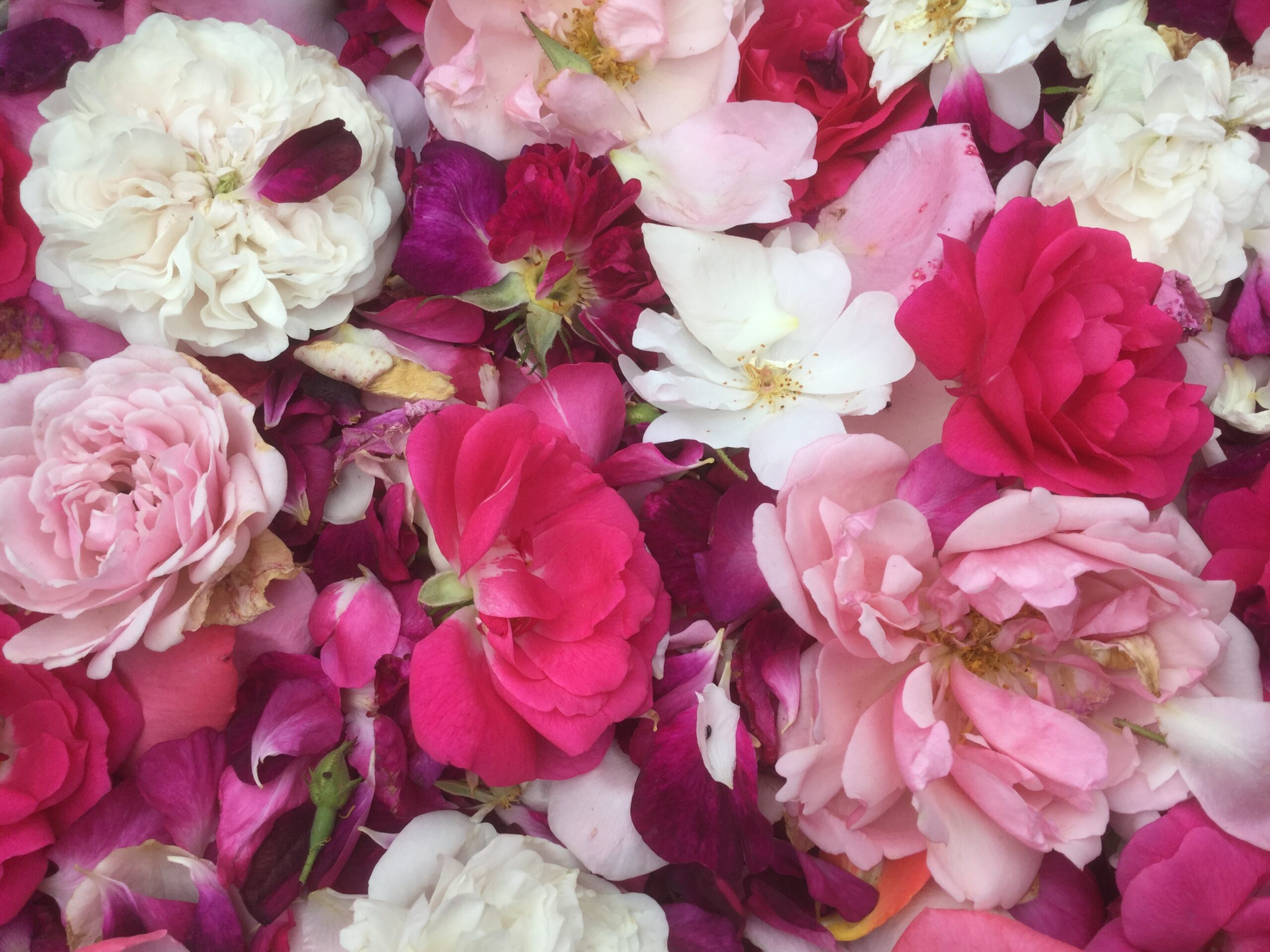
It’s time for the rose harvest. I’m making rose glycerite today! I love roses…doesn’t everybody?  I think I use more rose than almost any other herb in my practice…maybe as much as California poppy, gotu kola and chamomile.

The beautiful rose is a wonderful rejuvenative, helping to decrease the signs of ageing when used internally as well as applied to the skin. It makes a great tonic for the heart and mind and can be used for all three doshas. Rose helps improve memory and eyesight and is a lovely herb for calming anxiety. It is a perfect remedy for excess sadhaka pitta which might make us feel irritable or angry, or cause us to suffer from low self esteem and low spirits. It is excellent for cooling inflammatory digestive problems such as gastritis, peptic ulcers, enteritis, diarrhoea and even dysentery. It clears toxins from the gut and even helps regulate metabolism and weight.  It clears excess pitta and ama from the blood (rakta dhatu), and is good for pitta problems like bleeding problems and inflammatory skin problems (such as herpes, measles, acne and chicken pox). The exquisite rose has always been the emblem of love so it is hardly surprising that it has an affinity with the reproductive system (shukra dhatu) and is used for easing menstrual and menopausal symptoms, relieving uterine spasm and congestion which can cause pain, heavy and irregular periods.

In the autumn you can use rose hips to make a syrup or decoction of the empty seed cases, or dry them and grind them into powder. They make a good remedy for diarrhoea, colic, constipation, nausea and indigestion.

Rose hips are also anti-inflammatory, and can reduce pain and increase flexibility in osteoarthritis. Rose also benefits the respiratory system, and both the hips and the flowers help prevent as well as relieve colds, flu, fevers, sore throats, catarrh, cough and bronchitis.

If you have any aromatic roses in your garden, why not make a glycerite?  All you need to do is fill a jar with fresh roses, and pour over a mixture of plant glycerol and vodka at a ratio of 60:40 until you submerge the petals. Leave away from sunlight for about 3-4 weeks and then press through muslin….then try it out as a love potion and see what happens! It’s delicious!

Spring Cleaning, why we need to detox

Just as we regularly take showers, wash our hair, brush our teeth and tend to the outside of our bodies, the internal systems of our body – most importantly our digestive system – benefit from regular cleansing and care.

Toxins are a product of our everyday lives and are related to our lifestyles, our diet and digestion, the health of our gut, our environment, the air we breathe, the water we drink, and our emotional patterns and tendencies. They are substances that are potentially harmful to the body; they lower our defences and predispose us to ill health. Free radical damage occurs due to the accumulation of toxins in the body and research highlights the role of free radicals in the ageing process, the development of many degenerative diseases and immunological problems.

If you experience symptoms such as fatigue, sluggish elimination, skin problems, allergies, frequent infections, bags under the eyes, abdominal bloating, menstrual difficulties, depression or foggy-mindedness, your body might be telling you it is ready for a detox! It may be time to change your eating habits, live a healthier lifestyle and cleanse your body of toxins so you can reap the benefits of being healthier with increased energy, vitality and enthusiasm for life.

Ayurveda gives us two levels of detoxification treatments: one that we can easily do at home and incorporate into our lives and one that requires deeper cleansing and the support of trained specialists.

Shamana involves enhancing digestion and elimination and is called ‘palliation therapy’. It is a slower and gentler method of detoxification, best suited to home treatment as it does not require the same amount of preparation or the stronger purification methods of panchakarma. It can be employed as part of a milder detox approach for those not needing or not being able to undergo deeper cleansing. Palliation therapy can be done at the junction of the seasons – such as winter into spring – and whenever needed, but not in cold weather. When done regularly can be as effective as panchakarma.

Shodana is the deep and thorough cleansing of the srotas known as ‘purification therapy’, or panchakarma, which necessitates residential care in special therapy centres. There are some existing panchakarma centres in Europe and in the United States but otherwise this is only available in India and Sri Lanka.

Why Detox in Spring?

In winter, the cold weather causes our bodies to contract, inhibiting the free flow of nutrients and wastes, and making it hard for the body to release toxins. It is a time for hibernation and storing our vital energy. It is best to do a detox only once the spring has melted the ice, the world around us has started to warm up and nature starts to burst into life again. Our bodies relax into the increasing warmth and our vital fluids start to flow more freely and by detoxing at this time we can be in tune with the seasons.

It is interesting how there is alignment between East and West regarding cleansing of toxins in spring. There are long standing traditions in Britain and Europe to do a spring detox using cleansing herbs like dandelion, nettles and cleavers, alongside eating a light diet with plenty of fresh greens. Spring is when the world wakes up –  we can observe the rising of heat in the natural world, the flow of sap through the trees and the growth of plants all around us. In our bodies internal toxins, which have been accumulating through the winter, begin to surface too. If we eliminate them now we can lay a good foundation for health through the summer. Once cleansed of toxins, the body is able to operate its homeostatic mechanisms and maintain balance in body and mind unimpeded by toxic accumulations.

Your Detox

If your health is generally good you can do a fairly thorough home detox following simple guidelines. A short period of detoxification at least once a year is recommended, but not for pregnant women, nursing mothers, children, and patients with chronic degenerative diseases, cancer or tuberculosis. If you suffer from chronic health problems you may have a more deep-seated state of toxicity, in which case it is better to consult a practitioner for their guidance on specific recommendations for your particular detox programme as it is possible that deeper cleansing therapy is needed.

A detox programme can help the body’s natural cleaning process by:

  • Enhancing good digestion
  • Resting the organs through fasting;
  • Stimulating the liver to clear toxins from the body;
  • Promoting elimination through the bowels, kidneys and skin;
  • Improving circulation of the blood and lymph using massage and exercise.
  • This can then be followed by nourishing the body with healthy nutrients.

How Good is your Digestion?

Good digestion is vital for optimum health – incomplete or disordered digestion is where the first stages of disease begin. When our digestion is good, our food is digested and assimilated to nourish our tissues, and the waste products are passed out through regular bowel movements.

The waste products of incomplete digestion are the most common type of toxin. While agni is light, clean, hot and pure, ama is described as heavy, thick, cold, sticky and foul smelling. Incompletely digested food materials ferment and set up an internal environment that supports the growth of pathogenic bacteria, yeasts and parasites. Endotoxins irritate the gut lining causing small holes in the gut wall, (known as leaky gut syndrome), which allows molecules of undigested and partially digested food as well as toxins through the gut wall. These wreak havoc with our immune system and predispose us to food allergies and autoimmune disease.

Our ability to digest well is greatly influenced by our reactions to our external environment. The wrong diet and lifestyle, incompatible food combinations, the effect of the weather or season, repressed emotions and stress can all adversely affect our digestion. When food is not digested well, partially digested or undigested foods remain in the gut, then ferment and produce toxins which enter the blood stream and circulate throughout the body. Toxins in the gut are increased by eating too much or too little, eating when stressed or before the previous meal is properly digested, by eating late or going to sleep on a full stomach, or by eating foods that are left over, processed, old or fermented. Gut toxicity blocks the assimilation of beneficial nutrients, meaning that the right nutrients and remedies cannot be properly utilised by the body.

The great news is that your digestive system can clear toxicity from the body if you just support it a little through dietary changes; 

  • Take good quality probiotic supplements to help balance the bacterial population of your gut (we like Wise Owl E505)
  • Make sure 70% of your diet are vegetables to provide enough fibre for regular bowel movements and to support a healthy gut flora
  • Include detoxifying foods such as beetroot, radishes, artichokes, cabbage, broccoli, spirulina and chlorella, and drink at least 2 litres of water a day
  • Relax! It is not enough to eat well if you are tense, stressed, over worked and you don’t allow enough time for rest, relaxation and sleep. Burning the candle at both ends is a debt which will inevitably be repaid!
  • Fast: the length and type of fast depends on your dosha and how you are feeling at the time. Fasting for vata and pitta could be a day of light nourishing food such as kitcheri, whereas kapha may prefer a day of only herbal teas or light broths. The aim is to free up energy for cleansing and healing, so long or very severe fasts that deplete the body are not recommended.

Stress

Taking time to de-stress is of paramount importance. Stress – pressure from external demands or internal expectation – is one of the biggest issues in many peoples’ lives and it triggers your body to release stress-hormones into the bloodstream. While these can provide the energy and motivation to work hard or meet a deadline, in large amounts they create toxins and slow down detoxification enzymes in the liver. It’s a good idea while you are physically detoxing to think about emotionally detoxing as well. Take stock of your life with a view to minimising stress, finding new ways of coping with it or increasing your resilience to it.

Yoga and meditation are simple and effective ways to relax and help transform your attitude to life and its inevitable stresses. We all have a wealth of experience, much of it challenging, which may remain unprocessed and unresolved and allowing time for processing may be easier than you think. One of the simplest ways to do this is by having regular quiet-times or practicing meditation so that we let emotions come to the surface. There are many free yoga and meditation tutorials online, you can try this 20 minute beginners guided meditation by Jon Kabat-Zinn for instance. In the same way that some physical detoxes require the support of trained practitioners, some emotional detoxes also require external support to process and clear the emotional toxins.

Liver

You can cleanse and protect your liver by taking herbs such as dandelion root, burdock and milk thistle, adding turmeric to your diet and drinking green tea. Taking a supplement of vitamin C helps the body produce glutathione, a liver compound that also helps break down toxins.

Exercise

Yoga, Qi Gong, T’ai chi and pilates are all great exercise that are accessible for most people. However, simply walking in the fresh air is also excellent – and free! One hour every day is ideal – but even ten or twenty minutes is great if you are busy. Practicing breathing deeply will also allow more oxygen to circulate through your system and enhance your body’s ability to repair itself.

Herbs

There are several herbs that could prove very useful in clearing toxins from the gut:

  • Cat’s claw, garlic, myrrh, andrographis, olive leaf and reishi mushroom are all excellent for combating ‘unfriendly’ gut micro-organisms.
  • Oregon grape, elecampane, dill, burdock, bearberry, calendula, Echinacea, fennel and kelp act similarly.
  • Aloe vera juice, (25 mls twice daily) is soothing, immune enhancing and combats dysbiosis.

Preventative Measures

However effective a detox is, prevention is the key to health, so the best plan is to prevent a build-up of toxins through a healthy lifestyle:

  • Exercise every day to improve your digestion and elimination
  • Eat a healthy diet which as much organic food as possible
  • Do a daily oil massage to flush out toxins through the skin
  • Drink herbal teas regularly to improve digestion
  • Practice relaxation or meditation every day to help reduce stress. Enjoy yourself!
  • Avoid smoking, the use of recreational drugs, coffee, alcohol and white sugar and over-work.

Let us know if these tips help you live a more balanced life.

See you next month!

Anne x


Please note:

It is recommended that we should detox at least once a year and a short detoxifying programme is generally safe, but is not recommended for pregnant women, nursing mothers, children, and patients with chronic degenerative diseases, cancer or tuberculosis.

Afternoon Herb Walk and Tea


Come and spend an afternoon with Anne on May 26th and June 16th in her unique herb garden at Artemis House in the Cotswolds where she will share her knowledge of herbal remedies that are useful at different stages throughout life. Her beautiful garden is laid out in a spiral which represents a woman’s journey through life beginning at birth and ending in paradise.

You will be given a guided tour of the garden by Anne along with a handout with information about the herbs and their uses for your own reference. The tour will be followed by herbal teas (made by ourselves using herbs from the garden) and cake and the opportunity to purchase herbs grown here at Artemis House, and Anne’s books and herbal remedies from her dispensary.

The afternoon will run from 2.30pm until 5pm.

Price £40 per person.

The Healing Power of Medicinal Herbs from the Garden


You are invited to join Anne on 21st May 2020 at home in the Cotswolds where we will be spending the day in her beautiful spiral herb garden looking at the healing power of herbs that you may already have growing in your own garden.

The day will include a full tour of Anne’s herb garden which is laid out in a spiral which represents a woman’s life from birth to paradise expressed through herbs. We will be discussing how you can use your own home grown herbs to treat everyday ailments and how you can make them into simple preparations. A delicious herbal / vegetarian lunch and teas will be included.

Times – 10am – 4pm

Price – £95

Herbal Medicine Through the Seasons – An Experiential Four Weekend Course at Trill Farm in Devon


In May 2020 I will be going back to Trill Farm to teach my seasonal foraging and herbal medicine course.

I will be hosting four foraging weekends at Trill this year when we will be looking at the herbs growing in each season. The four weekends (Spring, Summer, Autumn and Winter) will provide you with knowledge and skills to use the extraordinary resources of the medicinal plants growing around you throughout the year.

These are practical, hands-on weekends and we will be finding, identifying and preparing wild and cultivated medicinal plants and discussing their medicinal properties, so that you can use them with confidence to promote health of body and mind. You will also learn how to make preparations with the herbs we find, including infusions, decoctions, creams, lotions, ointments, elixirs, glycerites and tinctures.

Join me on a journey of discovery as I guide you to identify and forage wild herbs, understand their medicinal properties and uses, and share the skills to create and take home a range of herbal remedies for your health and wellbeing.

About Trill Farm

Trill is a 300 acre mixed organic farm in east Devon which has been owned by Romy Fraser and her family since 2008. Romy moved here after selling her previous business, Neal’s Yard Remedies, which she built up from a small shop in 1981 to the multi-national company it is today. As you may imagine, someone like Romy wouldn’t own just any ordinary farm! Trill is a collection of small businesses and educators who are all working together with the same ethos, following the highest standards of organic practice and protecting and conserving the environment and wildlife of the farm. There is the strong belief that food is at the heart of life and their stated aim is ‘to celebrate and reaffirm the connection between humanity, the animal kingdom and the nature which sustains us all.‘ There are courses running at Trill Farm throughout the year, with the option of staying at the luxurious, ecologically renovated B&B or in the summer at the peaceful campsite (with open air showers and composting loos!).

Bookings can be made by calling Trill Farm on 01297 631 113 or by clicking this link to their website.

I hope you can join me!

Lampeter Herbs and Folk – Summer Conference


Anne will be speaking at this year’s herbs and folk conference in Lampeter which will be held between August 16th – 20th. Follow the link for more details and to book your place.

https://uwtsd.ac.uk/herbs/

Evening Herb Walk at Artemis House


SOLD OUT Join Anne in her beautiful spiral herb garden this summer as she takes you around the garden on a journey through a woman’s life from birth to paradise expressed through herbs.

Spend the evening with Anne on July 11th 2019 in her herb garden at Artemis House where she will share her knowledge of herbal remedies that are useful at different stages throughout a woman’s life. Her beautiful garden is laid out in a spiral which represents a woman’s journey through life beginning at birth and ending in paradise. 

The evening will run from 7pm until 9pm with the opportunity to purchase herbs from the garden as well as Anne’s books and herbal remedies. 

*SOLD OUT* Price £20 per person. 

To book your place please email us at clinic@annemcintyre.com 

The Herbal Path, Portugal


Join me in the Algarve on 18th and 19th September 2019 for another two day residential at the lovely Melilotus herb farm hosted by the wonderful duo Maureen Robertson and Jose Melo. This time we will be exploring the Ayurvedic approach to detoxification.

In the Ayurvedic tradition, detoxification followed by rejuvenation (rasayana) is the first step to enhancing health of mind and body. Regular periods of detoxification can help to protect us from developing health problems, increase our energy and vitality and promote a sense of joy and wellbeing.​

The accumulation of toxins is part of life and can affect us on both physical as well as subtle levels. Psychologically, when we are not able to process difficult times in life, mental and emotional toxins accumulate from holding onto negative emotions and undigested experiences. ​

The incredible teachings of Ayurveda provide us with wise counsel for helping us to let go of these toxins as well as a medicine chest of remedies from the natural world to bring us back into harmony in body and mind. During our two days workshop we will explore many of these and you will leave with a deeper understanding of Ayurveda as well as practical tools for self healing. 

For more information and bookings please click through to their website.

A Series of One Day Herb Courses at Artemis House


Join Anne in her beautiful herb garden for an introduction to the medicinal benefits of the herbs you know and love and learn how to make them into remedies at home.

Anne is offering three one-day workshops over a few weeks this summer that can be taken either together as a series or singularly. She will introduce you to the amazing healing benefits of the herbs you know and love which might be growing in your gardens or wild in the surrounding countryside.

Workshop 1 June 13th 2019 – The day will include a full tour of the herb garden where you will learn how the spiral layout and plant positioning represents a woman’s journey through life from birth to paradise. We will be looking at the uses of the different herbs for everyday ailments.  

Workshop 2 on June 28th 2019 – The day will include learning how to cook simple gluten, dairy, and sugar free recipes for good gut health.

Workshop 3 on July 4th 2019 – The day will include harvesting some of the herbs from the garden and making preparations so that you will leave with growing confidence to use herbs to help treat simple ailments at home. 

Anne has an impressive herb garden laid out in a spiral representing a journey through life expressed through herbs. Weather permitting, there will be an opportunity to be taken round the spiral of life!

For more information email us on clinic@annemcintyre.com or phone 01451 810096.